
Kettlebell Snatch Challenge: the 10-Minute Test and How I Track It with My Garmin
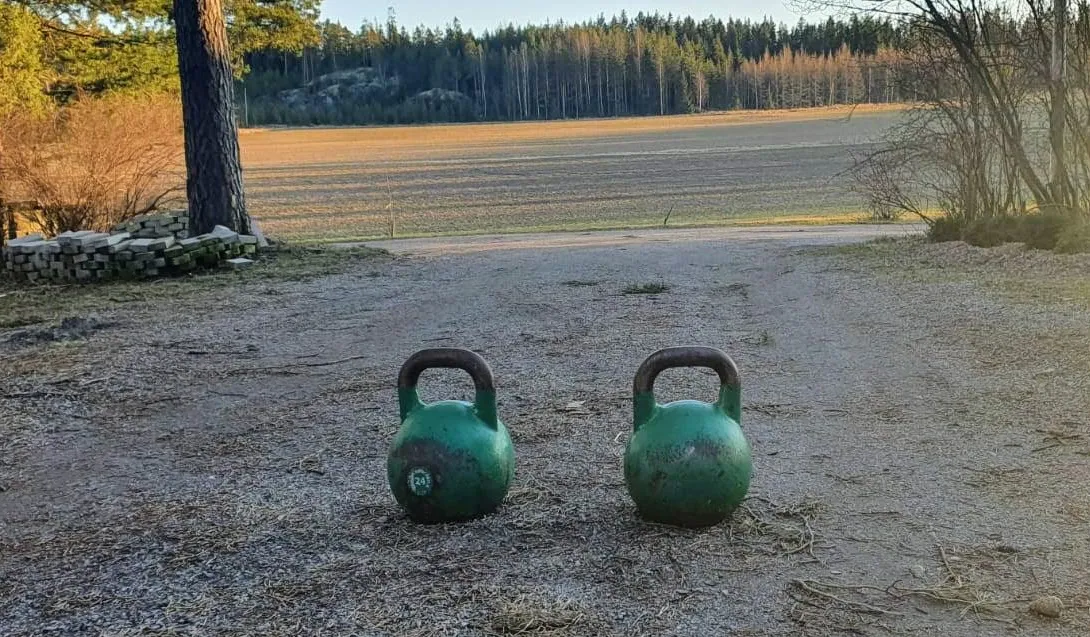
What do kettlebells do for your body? Kettlebells give you a full-body workout for both strength and cardio. You can build muscle, improve your endurance and get lean with different kettlebell exercises.
Kettlebell workouts are great for building strength and stability. Compared with most gym equipment, you have to stay in control of the bell all the time. That challenges your coordination and works your core at the same time.
One big advantage is that with a few kettlebells, or even just one, you can train at home without any other equipment, indoors or outdoors.
How this challenge started
Before the COVID-19 outbreak in 2020 I went to the gym about four times a week. When the gyms closed, I had to get creative at home. I wasn’t new to kettlebells, but I hadn’t used them much, and the kettlebell snatch was something I still struggled with.
Then I heard about a test where you do snatches non-stop for 10 minutes. According to some, you are in really good shape if you can do 10 minutes of snatches with a 24 kg kettlebell. I could do a few snatches with 24 kg, but certainly not for 10 minutes, so I set that as my goal.
I wasn’t alone. In spring 2020 kettlebells sold out in many shops, and Google Trends showed a spike in interest at the same time.
Tracking kettlebell and CrossFit workouts with a smartwatch
These days I train at a CrossFit box, and I always wear my Garmin Enduro 3 in my workouts, kettlebell work included.
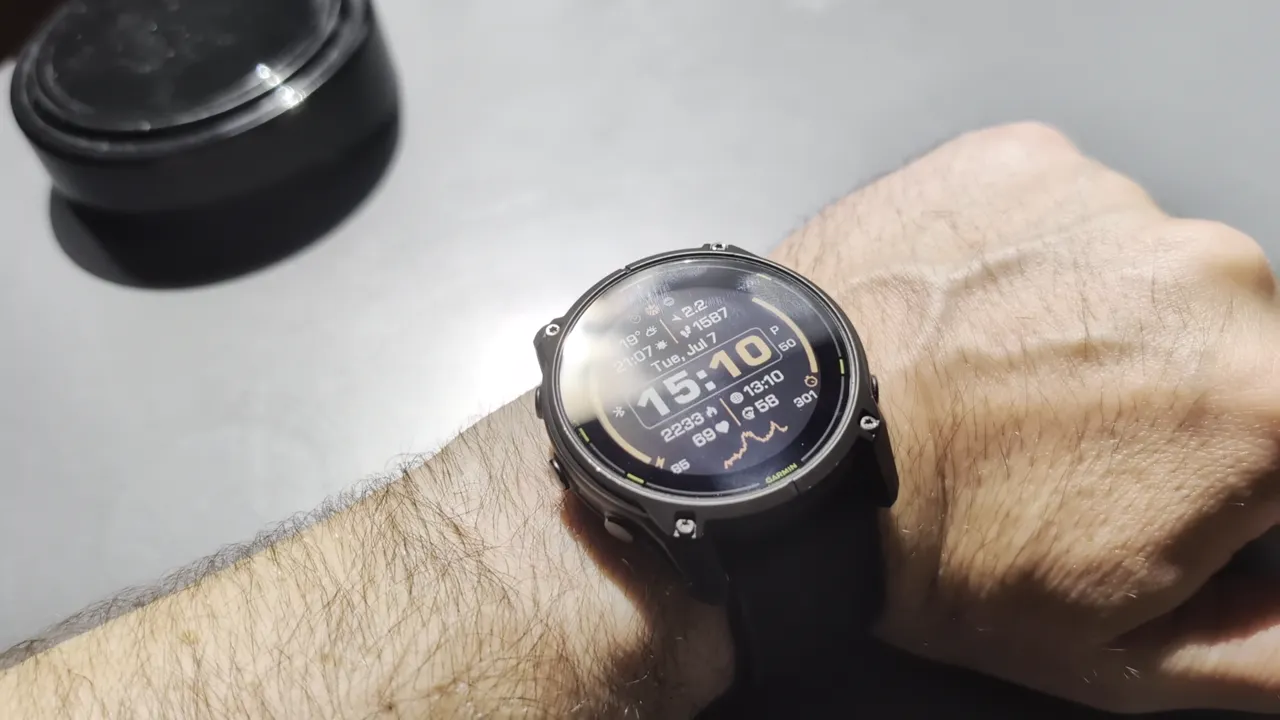
A few reasons it works well for this kind of training:
- Workout profiles for gym training. Garmin’s Strength profile logs sets and reps, and the HIIT profile has timers for formats such as AMRAP, EMOM and Tabata. A 10-minute snatch test is easy to run as a simple timed workout.
- Heart rate and training load. It is interesting to see how hard a 10-minute snatch set really is. It pushes my heart rate much higher than a typical strength session, and the watch counts it towards training load and recovery time.
- Battery life. The Enduro 3 lasts for weeks between charges, so I never have to think about charging before a workout.
- Nylon strap. Kettlebell snatches and cleans hit the wrist and forearm. A soft nylon strap is much more comfortable than a metal or hard silicone one, and you can wear the watch a little higher on the wrist so the bell doesn’t knock it.
A tip on rep counting: automatic rep counting in strength workouts tends to work best with slower, controlled lifts. With fast, ballistic movements like snatches, it is worth checking the rep count after the set and correcting it in the watch or the Garmin Connect app.
If you are choosing a watch for CrossFit and kettlebell training, my comparison of the Garmin Fenix 8 and Enduro 3 explains the differences between the two.
Choosing a kettlebell size
Kettlebells are essentially cast iron or cast steel balls with a handle on top.
What weight should you start with? It depends on your age, weight, fitness level and experience with weight training. As a general guideline, men with weight training experience can start with 16 kg, and men without it with 12 kg. Women with weight training experience can start with 12 kg, and women without it with 8 kg.
Those guidelines work well for movements like the kettlebell swing. You will quickly get stronger, though, and eventually you will want a set:
- For women, a good set is 8 kg, 12 kg and 16 kg.
- For men, a good set is 12 kg, 16 kg and 24 kg.
The kettlebell snatch is not an easy movement, so it makes sense to start lighter and work up as your technique improves.
Kettlebell sizes
Kettlebells come from Russia. The Russian girya was a metal weight used for weighing crops, and its unit of measurement was the pood. One pood is about 16 kg, so the traditional kettlebell sizes were 1 pood (16 kg), 1.5 poods (24 kg) and 2 poods (32 kg).
Today competition kettlebells come in many sizes. These are the most common:
- 8 kg: 0.5 pood
- 12 kg: 0.75 pood
- 16 kg: 1 pood
- 20 kg: 1.25 poods
- 24 kg: 1.5 poods
- 28 kg: 1.75 poods
- 32 kg: 2 poods
Sizes in 2 kg steps, such as 10 kg and 14 kg, are also available, as are kettlebells heavier than 32 kg.
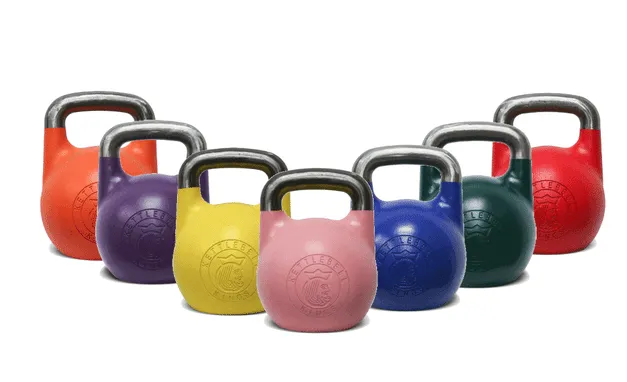
Competition kettlebells are the same shape and size whatever their weight, which makes switching between weights easier. They are also colour-coded the same way by every manufacturer, so you can tell the weight from the colour.
Why kettlebells suit a home gym
- Versatile. You can train both strength and cardio with the same equipment.
- Inexpensive. A few kettlebells cost much less than a barbell, plates and a rack.
- Small. They are easy to store.
- Time-saving. Training at home or in the yard saves the trip to the gym.
The 10-minute kettlebell snatch test
There are several kettlebell snatch tests, such as the Secret Service snatch test, the RKC 5-minute snatch test and the 10-minute snatch technique test.
The one I found most interesting was the 10-minute snatch test: 10 minutes of unbroken snatches with just one hand switch. For example, you can start with your left arm, do 5 minutes without a break, then switch to your right arm and do another 5 minutes.
The test I found online is part of the Kettlebell Snatch Teacher L4 certification by Cavemantraining. It requires a kettlebell of at least 15% of your body weight. For someone weighing 90 kg, that is only 13.5 kg, or 14 kg rounded up.
I’m not interested in the certification, but for endurance and fitness, 10 minutes of snatches with 24 kg would be an awesome goal. It is also fun to compete with training friends.
By the certification rule, my kettlebell would be somewhere between 12 kg and 14 kg. Because my snatch technique wasn’t great yet, I started with 8 kg to see whether I could even complete the full 10 minutes. In mid-April 2020 I did 245 reps with 8 kg in 10 minutes with one switch.
My 60-day snatch challenge
My version of the challenge is to do the 10-minute snatch test daily for 60 days:
- Start with a weight you can complete the full 10 minutes with.
- Do the 10 minutes every day and log the number of reps.
- When the reps clearly go up and your technique feels solid, move up to the next kettlebell.
- Keep working towards your personal goal, for example 24 kg for men or 16 kg for women.
Logging each session on a watch makes the progress easy to follow: the reps go up, and the heart rate for the same work comes down.
Kettlebell snatch technique
A barbell snatch is challenging, but I would say the kettlebell snatch needs even more coordination and technique. A few points that helped me:
- Hike the bell back between your legs as in a swing, and drive it up with your hips, not your arm.
- Keep the bell close to your body on the way up, and punch your hand through at the top so the bell doesn’t flip over and hit your forearm.
- Lock out overhead with your biceps next to your ear before you start the next rep.
- Breathe in rhythm with the reps. In a 10-minute set, holding your breath runs you out of energy fast.
The best way to learn is from good training videos, and if possible from a coach who can watch your technique. At a CrossFit box, the coaches are happy to help.